A finished mattress may look simple from the outside, but its performance depends on a series of carefully coordinated manufacturing decisions. The fabric, comfort layers, support core, edge construction and packaging all contribute to the final product.
For mattress retailers, wholesalers, furniture brands and hospitality buyers, understanding the mattress manufacturing process is more than a matter of curiosity. It helps them evaluate suppliers, compare product specifications, identify potential quality risks and make better decisions when developing a mattress range.
Although production methods vary by mattress type and factory equipment, most mattresses follow a common manufacturing route: product specification, material inspection, component preparation, layer assembly, finishing, quality inspection and packaging. Here is how these stages work together.
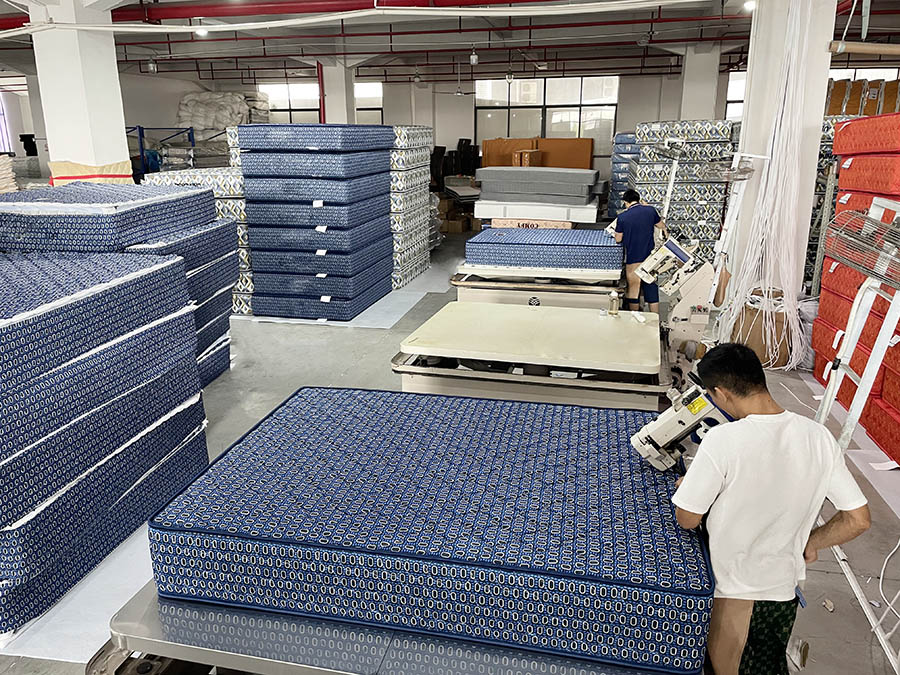
mattress manufacturing process 01
Before production begins, the manufacturer needs a clear product specification. This stage determines what the mattress is designed to deliver and how it will be constructed.
A product specification may include:
For a pocket spring mattress, for example, the specification may identify the spring wire gauge, coil height, number of turns, pocket fabric and spring arrangement. For a foam mattress, the key details may include foam type, density, layer thickness and the order of the comfort and support layers.
These details are normally organised into a bill of materials (BOM) and production instructions. A clear BOM helps purchasing, production and quality-control teams work from the same requirements. It also makes it easier to reproduce the approved sample in later bulk orders.
For OEM and ODM projects, this stage is particularly important during the mattress manufacturing process. Buyers should confirm the specifications and sample approval process before mass production starts.
The quality of a mattress is influenced long before the first component reaches the assembly line. Manufacturers select materials according to the mattress design, target market, price positioning and customer requirements.
Common mattress raw materials include:
When materials arrive at the factory, incoming inspection helps identify problems before they affect production. Depending on the material, checks may cover dimensions, thickness, density documentation, colour consistency, surface defects, packaging condition and conformity with the approved sample.
One point worth noting is that foam density and firmness are not the same measurement. Density describes the mass of foam per unit volume, while firmness relates to how the foam responds under compression. Buyers should therefore review the relevant technical specifications rather than judging foam quality from a single number.
A consistent incoming inspection process reduces avoidable variation between production batches.
Once the materials have passed the required checks, different components are prepared for assembly. The exact route depends on the mattress construction.
For spring mattresses, the support core may be produced in-house or sourced as a prepared spring unit, depending on the factory's production arrangement.
In a pocket spring system, individual steel coils are enclosed in fabric pockets and connected to form a support unit. Spring wire gauge, coil dimensions, spring count and layout all influence the construction. Bonnell spring systems use interconnected hourglass-shaped coils and have a different support structure.
The spring unit should match the approved specification and fit the intended mattress dimensions.
Foam blocks or sheets are cut into the required lengths, widths and thicknesses. Different layers may use different foam types or densities to create the intended comfort and support profile.
Accurate cutting matters because uneven dimensions can lead to misaligned layers, inconsistent mattress height or finishing problems during assembly. The prepared pieces should be checked against the production specification before moving to the next stage.
The mattress cover is prepared by cutting the selected fabric and, where required, quilting it together with comfort materials such as foam and fibre.
Quilting creates the stitched surface pattern and helps hold the panel layers in position. Stitch spacing, pattern alignment, fabric tension and panel dimensions all affect the finished appearance.
The top panel, bottom panel and side border are prepared according to the mattress design. Not every mattress uses the same quilting structure: a simple knitted cover, a pillow-top design and a deeply quilted hotel mattress may require different panel construction.
This is the stage where the prepared components come together to form the mattress.
For a typical hybrid or pocket spring mattress, the construction may include a spring support core, felt or insulating layers, foam comfort layers and quilted panels. A foam mattress follows a different route and does not require a spring unit.
The assembly team follows the approved layer sequence and production instructions. Depending on the design, layers may be joined using suitable adhesives, quilting or other specified construction methods. The purpose is to keep the components correctly positioned and maintain the intended mattress structure.
Several details deserve attention:
A mattress is not defined by its material list alone. The order, thickness and interaction of its layers are equally important. This is why an approved cross-section or construction drawing is useful for custom mattress projects.

After the team assembles the internal structure and panels, the mattress moves to the finishing stage.
Tape edge sewing joins the top panel, bottom panel and side border around the mattress perimeter. This operation gives the mattress a neat, enclosed shape. Consistent sewing helps maintain a clean edge and reduces visible finishing defects.
The operator or production team should pay attention to:
Additional finishing work may include attaching labels, handles, brand badges or other accessories specified by the customer. The final appearance should be checked against the approved sample and artwork.
Quality control should not be treated as a single final glance at the mattress manufacturing process. It is more effective when checks take place at different stages, from incoming materials to finished products.
Before packaging, the finished mattress should be inspected against the order requirements. Depending on the product and inspection plan, checks may include:
Dimensional inspection: Verify length, width and height against the agreed specifications and tolerances.
Appearance inspection: Check fabric colour, quilting alignment, surface cleanliness, border condition, labels and overall presentation.
Construction inspection: Confirm that the mattress structure, layer sequence and edge finishing correspond to the approved design.
Workmanship inspection: Look for loose threads, skipped stitches, open seams, uneven tape edges and other visible defects.
Order and labelling verification: Confirm product model, size, quantity, labels and packaging marks against the purchase order.
For projects requiring specific performance or regulatory documentation, buyers should agree on the applicable test methods and required certificates before production. Requirements can vary by destination market and product category, so a factory should not rely on a general claim of compliance in place of the documents relevant to the order.
For bulk buyers, consistency between samples and mass-produced units is especially important. A clear inspection checklist and documented acceptance criteria make it easier for both parties to resolve quality questions.
After passing the required inspection, the mattress is ready for storage or shipment. Choose the packaging according to the mattress construction, distribution channel, and transport requirements.
Common options include:
Not every mattress should be compressed or roll-packed. The suitability depends on the materials, construction, recovery characteristics and the manufacturer's validated packaging process. Buyers should confirm packaging compatibility and any recommended recovery time before placing an order.
Before dispatch, the factory should also verify carton or bag condition, product labels, shipping marks, quantities and loading arrangements. Good packaging protects the mattress during handling and transportation, while accurate documentation helps reduce avoidable receiving problems.

Packing and compressing area mattress manufacturing process 02
Understanding the mattress production process gives buyers a practical way to assess a potential supplier. Instead of focusing only on the unit price or factory photos, ask for information that shows how the supplier manages specifications and production consistency.
A useful supplier review can include these questions:
A reliable manufacturing relationship depends on clear communication and agreed standards at every stage—not simply on the equipment visible in a factory.
Foshan Bonis is a mattress manufacturer in China serving wholesale and OEM/ODM requirements, with product directions that include pocket spring, foam, hybrid and hotel mattresses.
For buyers developing a new mattress range or sourcing products for hospitality and retail projects, the first step is to define the intended application, target specifications, material preferences and packaging requirements. These details help the factory evaluate the construction and prepare a product proposal for review before starting bulk production.
Whether you are sourcing standard wholesale mattresses or developing a customised model, clear specifications and sample confirmation help keep the project aligned from product planning through manufacturing and delivery.
Explore our [mattress products], learn more about our [OEM & ODM mattress service], or view our [hotel mattress project solutions] to discuss your requirements with our team.
The production lead time depends on the mattress design, material availability, order quantity, sample approval and factory schedule. Custom materials or special packaging may require additional preparation. Buyers should confirm the production timeline with the supplier once both parties agree on the specifications and order details.
Common materials include knitted or woven fabric, polyurethane foam, memory foam, latex, steel spring units, non-woven fabric, felt, fibre, thread and selected adhesives. The exact combination depends on whether the mattress uses a spring, foam or hybrid construction.
Pocket spring mattress manufacturing includes preparing or sourcing a spring unit and integrating it with comfort and insulation layers. Foam mattress manufacturing focuses on cutting and assembling foam layers without a steel spring core. Hybrid mattresses combine a spring support system with foam or other comfort materials.
Quality checks may cover incoming materials, component dimensions, foam specifications, spring-unit conformity, layer alignment, sewing, finished mattress dimensions, appearance, labels and packaging. The inspection plan should match to the product specification and buyer requirements.
Many manufacturers offer OEM or ODM services for custom sizes, materials, layer structures, fabrics, labels and packaging. Buyers should confirm the supplier's actual capabilities, minimum order requirements, sample process and production schedule before placing an order.
No. Compression and roll packaging depend on the mattress materials, construction and recovery performance. Buyers should ask the manufacturer to confirm that the specific model is suitable for the selected packaging method.
The mattress manufacturing process is a sequence of connected decisions, from choosing materials and preparing components to assembling, inspecting and packing the finished product. For wholesale and project buyers, understanding these steps makes supplier evaluation more practical and helps turn product ideas into clear, repeatable manufacturing specifications.
Looking for a mattress manufacturing partner? Share your target mattress type, size, quantity and project requirements with Foshan Bonis to discuss a suitable OEM/ODM or wholesale solution.


 Chinese