When building a mattress brand, choosing the right manufacturing model affects more than production costs. It also determines who develops the product, how much control you have over its design, and how quickly you can bring it to market.
Two common options are OEM and ODM mattress manufacturing. Both allow brands to work with professional factories without investing in their own production facilities. However, they divide product development responsibilities in different ways.
In simple terms, OEM works well when you already have a product design or detailed specifications. ODM offers a more convenient starting point when you need a manufacturer's existing designs and development support.
So, which model fits your business? Let's look at the differences and the key points you should consider before choosing a mattress manufacturing partner.
OEM stands for Original Equipment Manufacturing. Under this model, your brand provides the product concept, design requirements, or technical specifications, while the mattress manufacturer handles production.
For example, you may already know the exact mattress you want to sell. You might have a preferred pocket spring system, foam density, fabric, firmness level, mattress height, and packaging format. You then share these requirements with the factory, which reviews the specifications and produces samples for your approval.
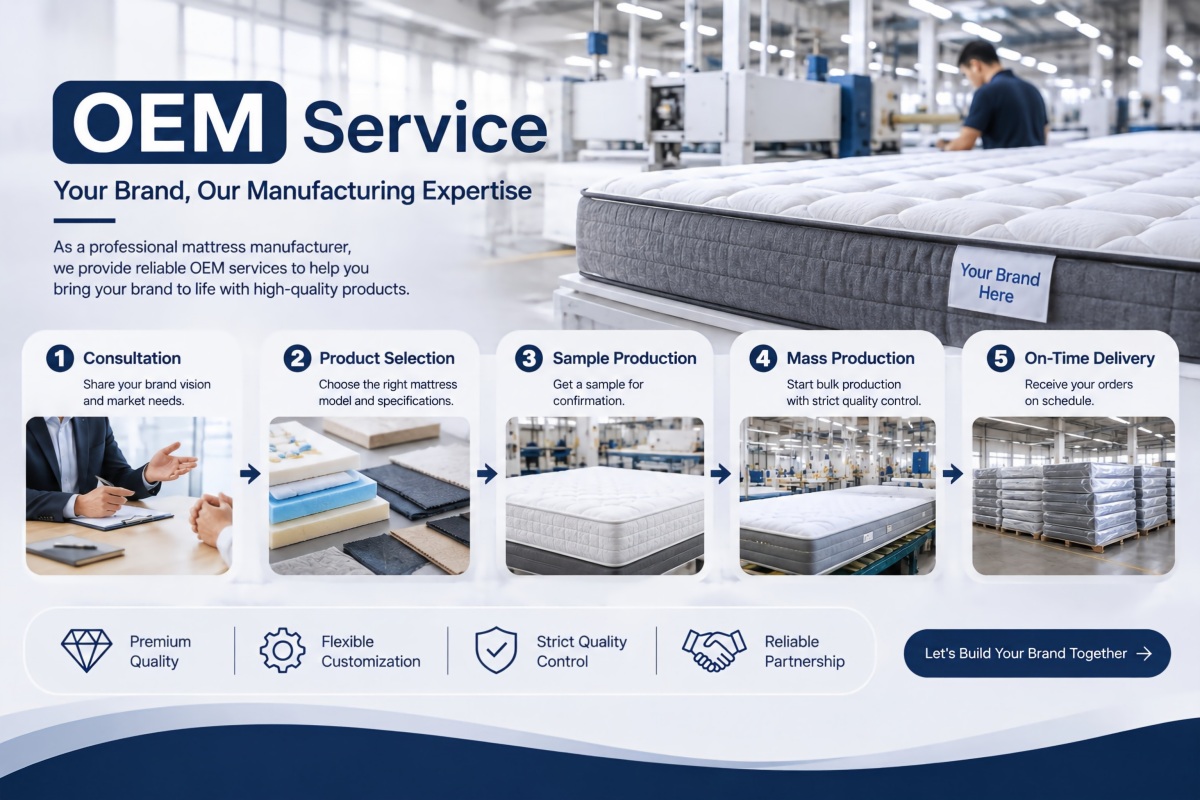
As a result, OEM gives your brand greater control over the product's construction and identity. It also works well when you already have a successful mattress model and want a manufacturer to reproduce it consistently.
However, you need to provide clear specifications and approve the final sample before mass production. Otherwise, differences in material interpretation or construction details may affect the finished product.
ODM stands for Original Design Manufacturing. In this model, the manufacturer provides an existing product design or development platform as the starting point.
Instead of developing every detail from scratch, you can review the factory's mattress collection and select models that match your target market. Then, you work with the manufacturer to adjust suitable features and add your brand identity.
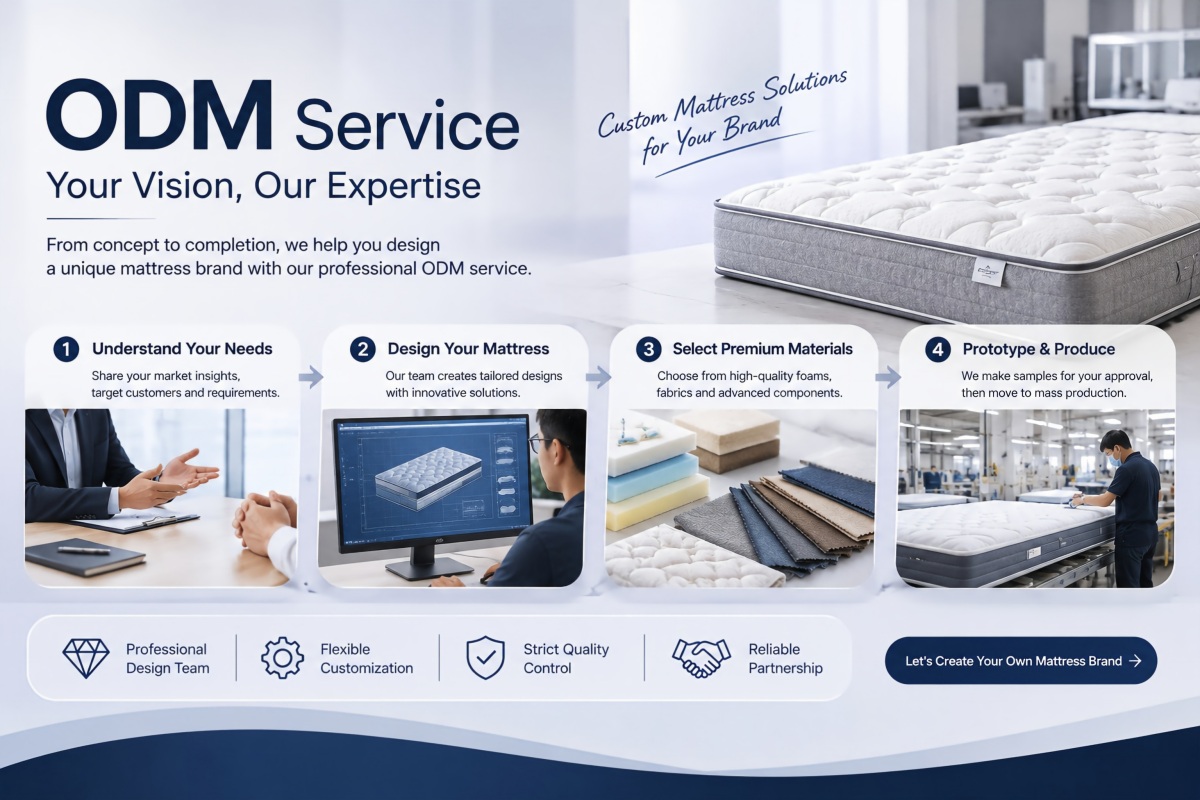
Although ODM starts with an existing design, it does not necessarily mean you have no customization options.
Depending on the manufacturer's capabilities, you may be able to adjust:
Therefore, ODM can help retailers, wholesalers, and new mattress brands shorten the product development process. It also allows buyers to focus more on market positioning, branding, and sales rather than developing every technical detail independently.
Nevertheless, you should confirm which parts of the original design the manufacturer can change. Some factories offer flexible adjustments, while others limit customization to fabric, branding, and packaging.
Both models support private-label mattress production. However, they differ in their starting points and the responsibilities each party takes during product development.
| Comparison | OEM Mattress | ODM Mattress |
|---|---|---|
| Starting point | Buyer provides the design or specifications | Manufacturer provides an existing design or platform |
| Product development | Mainly buyer-led | More manufacturer-led |
| Customization | Often extensive | Usually based on selected modifications |
| Technical input | Buyer provides detailed requirements | Manufacturer provides more initial guidance |
| Development workload | Usually higher for the buyer | Usually lower at the beginning |
| Development time | Depends on design complexity | Often shorter when using an existing model |
| Brand identity | Buyer's brand | Buyer's brand |
| Best suited for | Established brands with clear product requirements | Brands seeking a faster product launch |
OEM usually gives buyers more direct control because they define the product specifications from the beginning.
By comparison, ODM starts with the manufacturer's existing design. However, buyers can still influence selected features and the final brand presentation.
ODM may reduce initial development work because the manufacturer already has a product design to work from. In addition, the buyer may avoid some costs associated with developing a completely new construction.
OEM, on the other hand, may involve more sample revisions, material selection, and engineering coordination. However, the actual project cost depends on customization requirements, order quantity, materials, and production complexity.
Therefore, neither model always costs less. Ask the manufacturer to separate sample fees, tooling or development charges where applicable, unit prices, packaging costs, and other project expenses before comparing quotations.
The best choice depends on your product experience, development resources, target customers, and launch plans.
OEM may suit your business if:
For example, an established brand may want a pocket spring mattress with a specific coil count, foam density, fabric composition, and firmness level. In this case, OEM offers a clear way to communicate and reproduce those requirements.
ODM may suit your business if:
For example, an online retailer may select an existing memory foam or hybrid mattress model, adjust the cover and packaging, and launch it under its own brand.
As a result, ODM can reduce the amount of initial product development work. However, you should still review the construction and approve a physical sample before ordering in bulk.
Regardless of the model you choose, a clear development process helps both parties avoid costly misunderstandings.
A typical mattress OEM or ODM project follows these steps:
Step 1: Define Your Market and Product Requirements
First, explain your target market, customer group, mattress sizes, expected price range, and sales channels. These details help the manufacturer recommend suitable materials and product configurations.
Step 2: Confirm the Product Design
For OEM, provide your drawings, specifications, or reference samples. For ODM, review the manufacturer's existing models and discuss the changes you need.
Step 3: Review the Quotation and Specifications
Next, confirm the material list, mattress construction, dimensions, customization scope, order quantity, and packaging requirements. Make sure both parties understand the same specifications.
Step 4: Develop and Approve Samples
The manufacturer prepares a sample for evaluation. Check its appearance, dimensions, firmness, material layers, stitching, and other agreed requirements. If necessary, request revisions before approval.
Step 5: Confirm Bulk Production
Once you approve the sample and specifications, the factory can arrange production. Meanwhile, both parties should agree on quality inspection standards, production schedules, and packaging details.
Step 6: Inspect and Arrange Shipment
Finally, review the finished products against the approved sample and order requirements. Confirm carton labels, shipping marks, and packaging before dispatch.
This process creates a clear reference for future repeat orders and helps maintain product consistency.
ODM often provides a more convenient starting point because you can select an existing design and customize selected features. However, OEM may be a better choice if you already have a clear product concept and detailed specifications.
Yes. Many ODM projects support private-label branding, including mattress labels, hang tags, and packaging. However, confirm the available options with your manufacturer before placing an order.
Not always. OEM may involve more development work, while ODM may reduce initial design costs. However, materials, customization, order quantity, and packaging all affect the final quotation.
Often, yes. Depending on the manufacturer's design and production capabilities, you may adjust foam layers, spring configurations, or other comfort components. Confirm the available changes before approving the sample.
Prepare your target market, mattress sizes, preferred materials, firmness requirements, estimated order quantity, branding details, and packaging preferences. If you already have a reference mattress, photos or a sample can also help the manufacturer understand your expectations.
OEM and ODM both offer practical ways to develop a mattress brand without operating your own factory.
At Shangrou, you can discuss your mattress product requirements, material preferences, branding, and packaging needs with the team. Contact us to explore a suitable manufacturing solution for your next mattress collection.


 Chinese