A comfortable hotel bed can leave a lasting impression. Guests often remember how well they slept, how supportive the mattress felt, and whether they woke up refreshed. However, hotel mattresses do more than create a comfortable first impression. They must also perform consistently under frequent use by different guests.
This requirement creates important differences between a hotel mattress and a retail mattress. While residential models often focus on individual comfort preferences, hotel mattresses must balance comfort, durability, maintenance, and consistent performance across multiple guest rooms.
For hotel owners, procurement managers, mattress distributors, and hospitality project contractors, understanding these differences helps with product selection and long-term purchasing decisions.

The main difference lies in the intended use. Hotels need mattresses that can accommodate a wide range of sleepers and withstand frequent guest turnover. Retail mattresses, on the other hand, serve individual households with different comfort preferences and budgets.
Here is a general comparison:
| Comparison | Hotel Mattress | Retail Mattress |
|---|---|---|
| Main purpose | Consistent comfort for different guests | Personal comfort for household users |
| Comfort design | Usually balances support and cushioning | Covers a wider range of firmness preferences |
| Support system | Often uses pocket springs, innersprings, foam, or hybrid structures | Available in many construction types |
| Durability priorities | Designed with frequent use and repeated pressure in mind | Depends on product grade and household usage |
| Edge support | Often an important consideration for guest use | Varies by model |
| Motion isolation | Important for shared guest rooms | Depends on the support and comfort layers |
| Maintenance | Must fit housekeeping and room-maintenance routines | Usually managed by individual owners |
| Purchasing method | Often involves bulk orders and project specifications | Commonly involves individual purchases |
These differences describe common design priorities rather than fixed rules. A premium retail mattress can outperform a basic hotel model, while a well-designed commercial mattress can offer excellent comfort and durability.
Therefore, buyers should evaluate the actual construction and specifications instead of relying on the words "hotel quality" alone.
A hotel welcomes guests with different body types, sleeping positions, and comfort preferences. Consequently, its mattresses need to deliver a balanced sleeping experience rather than target one particular sleeper.
For example, a hotel guest may prefer a softer surface, while another may need firmer support. A well-designed hotel mattress should provide a reasonable balance between pressure relief and structural support.
Residential mattresses follow a different approach. Homeowners can select products according to their preferred firmness, sleeping position, body weight, and personal comfort requirements. As a result, the retail market offers a much wider range of specialized designs.
For hospitality projects, buyers should consider three important factors:
Ultimately, the goal is not to make every hotel mattress feel the same as a luxury retail mattress. Instead, the design should match the guest experience the property wants to provide.
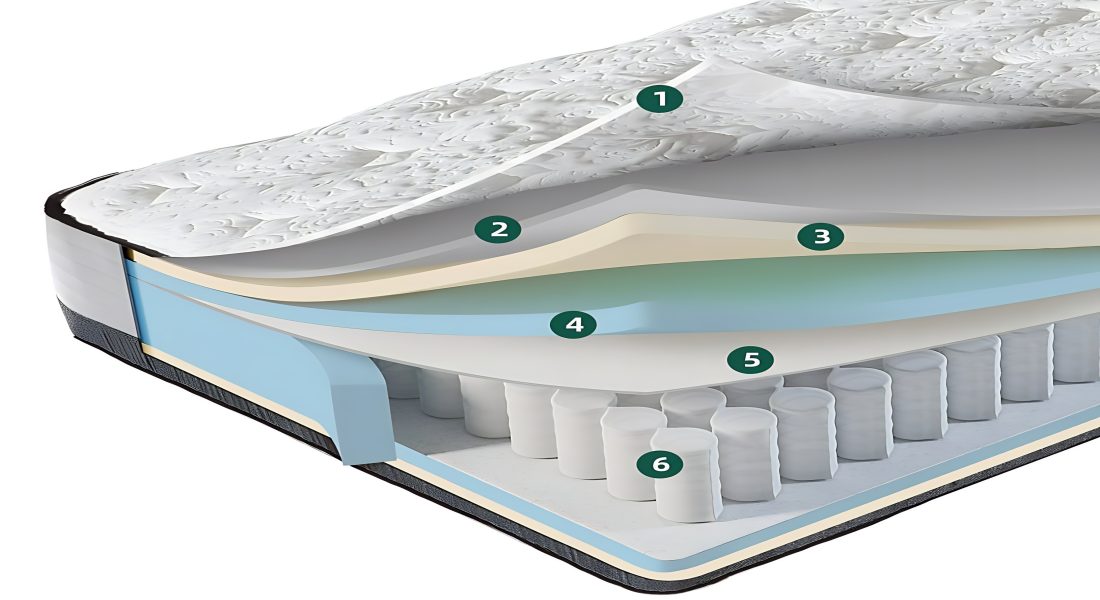
The internal structure plays a major role in mattress comfort and performance. Although hotels use different mattress types, buyers should pay close attention to the support core, comfort layers, upholstery, and edge construction.
3.1 Support Systems: Pocket Spring, Bonnell Spring, and Foam
Hotels can choose from several support systems according to their budgets and comfort requirements.
Pocket spring systems place individual coils inside fabric pockets. Each spring responds more independently to pressure, which can help reduce motion transfer between sleeping partners.
This construction works well for hotels that want a balance of support and motion isolation. However, buyers should still check spring wire gauge, coil count, spring height, and the overall design.
Bonnell spring systems connect hourglass-shaped coils into a linked support structure. They offer a practical option for projects that prioritize cost control and conventional spring support.
However, linked coils generally transfer more movement across the mattress than individually wrapped pocket springs. Buyers should evaluate the complete construction before making a decision.
Foam mattresses use foam as the primary support and comfort structure. Depending on the formulation and density, different foam layers can provide cushioning, contouring, and support.
Hybrid mattresses combine a spring support core with foam or latex comfort layers. This design can offer a balance of responsiveness, pressure relief, and support.
Foam specifications matter more than simply counting the number of layers.
For example, foam density indicates the mass of foam per unit volume. It helps buyers evaluate material composition and compare similar foam products. However, density does not directly determine firmness.
Firmness describes how a mattress responds when someone applies pressure. Therefore, buyers should request both density information and firmness specifications when evaluating foam materials.
In addition, comfort layer thickness affects how the mattress feels. A thicker layer does not automatically mean better quality. The foam type, density, resilience, and layer arrangement all influence the final result.
The mattress cover also contributes to the guest experience. Knitted fabrics, breathable textiles, and quilted surfaces can improve the initial feel and appearance.
Meanwhile, quilting helps secure the upholstery layers and creates the finished surface. Buyers should check stitching quality, fabric durability, and whether the design suits the hotel's cleaning and maintenance routines.
Edge support deserves attention as well. Hotel guests frequently sit on the mattress edge when getting dressed or preparing for bed. Reinforced foam edges or suitable support structures can help maintain stability around the perimeter.
A hotel mattress serves many different guests throughout its service life. Therefore, it faces repeated pressure, movement, and edge loading.
A residential mattress also experiences regular use, but its operating conditions depend on the household. Hotel procurement teams must consider a wider range of users and more frequent room turnover.
Several construction details can influence long-term performance:
However, no single specification guarantees a particular service life. Actual durability depends on the complete mattress design, material quality, guest usage, bed base, maintenance, and testing conditions.
For this reason, hotel buyers should request relevant performance information and evaluate samples before placing large orders.
Hotels must maintain clean and presentable guest rooms. Consequently, mattress selection should account for housekeeping routines and the use of protective bedding products.
A suitable mattress protector can help reduce direct contact with spills, sweat, and everyday contaminants. At the same time, housekeeping teams should follow the mattress manufacturer's care instructions to avoid damaging the cover or internal materials.
Buyers should also consider:
Fire safety deserves particular attention. Requirements vary by country, region, product type, and intended use. For example, buyers supplying the US market should verify which federal and local mattress flammability requirements apply to their products. Other markets may have different testing and documentation requirements.
Do not assume that a mattress meets a specific standard simply because a supplier describes it as commercial-grade. Instead, request the applicable test reports, certificates, and product documentation.
Consistency is another important difference between hotel and retail mattress purchasing.
A homeowner usually purchases one or two mattresses. A hotel, however, may need dozens or hundreds of units for the same property or several locations.
If different production batches deliver noticeably different firmness levels, heights, or surface feels, guests may receive inconsistent sleeping experiences across rooms.
Hotel buyers should therefore establish a clear product specification before mass production.
A practical specification sheet should include:
| Specification | What Buyers Should Confirm |
|---|---|
| Mattress dimensions | Width, length, and finished height |
| Support system | Pocket spring, Bonnell spring, foam, or hybrid |
| Spring details | Wire gauge, coil count, spring height, and arrangement |
| Foam materials | Type, density, thickness, and firmness |
| Comfort layers | Material combination and layer order |
| Fabric | Composition, weight, color, and surface finish |
| Edge support | Edge reinforcement method |
| Firmness | Agreed firmness level and sample reference |
| Packaging | Flat-packed, roll-packed, or compressed format |
In addition, buyers should approve a reference sample before mass production. The manufacturer can then use the approved sample and specification sheet as production references.
This approach helps reduce misunderstandings and supports more consistent results across repeat orders.
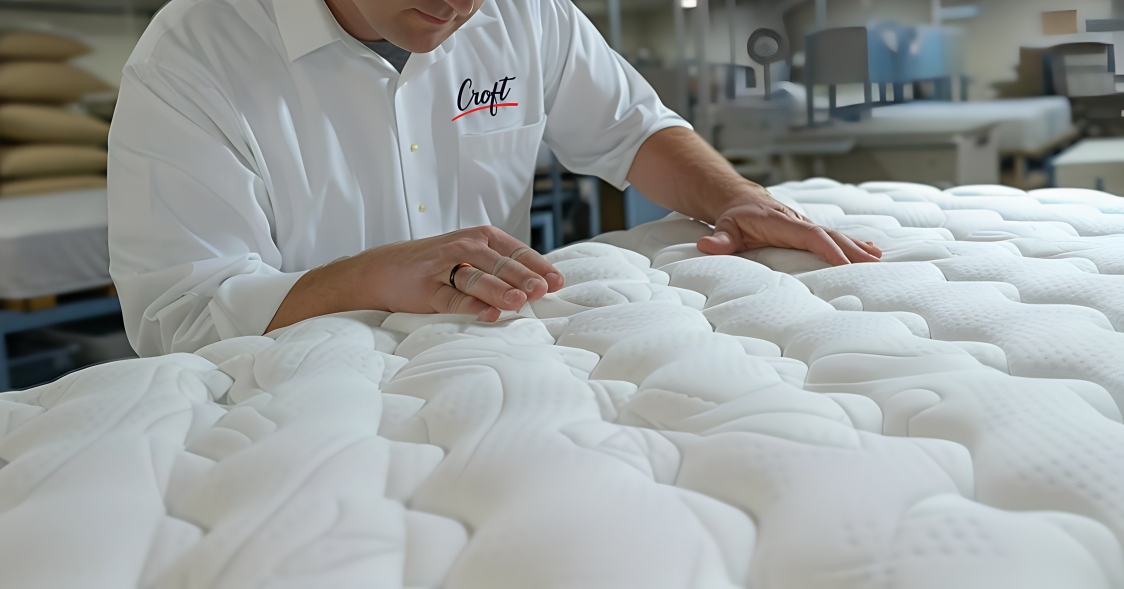
Choosing a hotel mattress involves more than comparing unit prices. Buyers should evaluate the product, manufacturer, logistics, and after-sales arrangements together.
Here are seven practical points to review before placing an order.
1. Match the Mattress to the Hotel Category
A luxury resort, business hotel, and budget accommodation property may have different comfort expectations. Define the target guest experience before selecting materials and construction.
2. Request a Detailed Material Specification
Ask the supplier to list the spring type, wire gauge, foam density, layer thickness, fabric composition, and finished dimensions. Clear specifications make supplier comparisons more reliable.
3. Test Samples Before Bulk Production
Review firmness, edge support, surface comfort, stitching, and overall construction. If possible, evaluate samples using the same bed base planned for the hotel rooms.
4. Review Quality Control Procedures
Ask how the manufacturer checks incoming materials, production dimensions, assembly quality, finished appearance, and packaging. Also confirm how the factory handles defective products and production deviations.
5. Confirm Compliance Requirements
Identify the regulations and documentation required in the destination market. Request relevant test reports and certificates before confirming the order.
6. Plan Packaging and Delivery
For large hotel projects, packaging can affect shipping costs, storage, and installation. Compare flat packaging with roll-packed or compressed options, and confirm that the selected mattress construction supports the proposed packaging method.
7. Discuss Repeat Orders and After-Sales Support
Hotels may need replacement mattresses or additional units in the future. Confirm whether the supplier can maintain the approved specifications and provide clear communication for repeat orders.
A reliable purchasing decision considers the total project requirements rather than focusing only on the lowest quotation.
Not necessarily. Hotel mattresses focus on consistent comfort, frequent use, and commercial operating requirements. Premium retail mattresses can offer more advanced materials or specialized comfort features. The better option depends on the intended use and product specifications.
Many hotels choose medium or medium-firm mattresses because they offer a balanced feel for different guests. However, firmness varies according to the hotel's brand positioning, target market, and guest preferences.
No. Hotels use pocket spring, Bonnell spring, foam, latex, and hybrid mattresses. Each construction offers different characteristics, so buyers should select the type that matches their comfort, budget, and project requirements.
Yes. Hotel mattresses can work well in residential bedrooms. However, buyers should compare the firmness, support, materials, dimensions, and bed-base compatibility before purchasing.
Look for clear material specifications, consistent production processes, quality inspection procedures, relevant compliance documents, sample approval arrangements, and reliable communication. For bulk projects, also review packaging options, delivery planning, and repeat-order support.
No. Mattress thickness alone cannot determine quality. Material density, support structure, layer design, workmanship, and performance testing provide more useful information.
A hotel mattress differs from a retail mattress mainly because of its intended operating environment. Hotels need a consistent sleeping experience for different guests while managing frequent use, housekeeping requirements, and large-scale purchasing.
Therefore, the right mattress should balance comfort, support, material quality, structural stability, and maintenance needs. Buyers should also confirm detailed specifications, evaluate samples, and review production quality before approving bulk orders.
For hotel owners, distributors, and hospitality project contractors, working with a mattress supplier that understands these requirements can make product selection and project planning more straight forward.
Looking for hotel mattresses for a new property or renovation project? Contact Shangrou to discuss your required sizes, mattress construction, materials, and project specifications.
Learn More


 Chinese